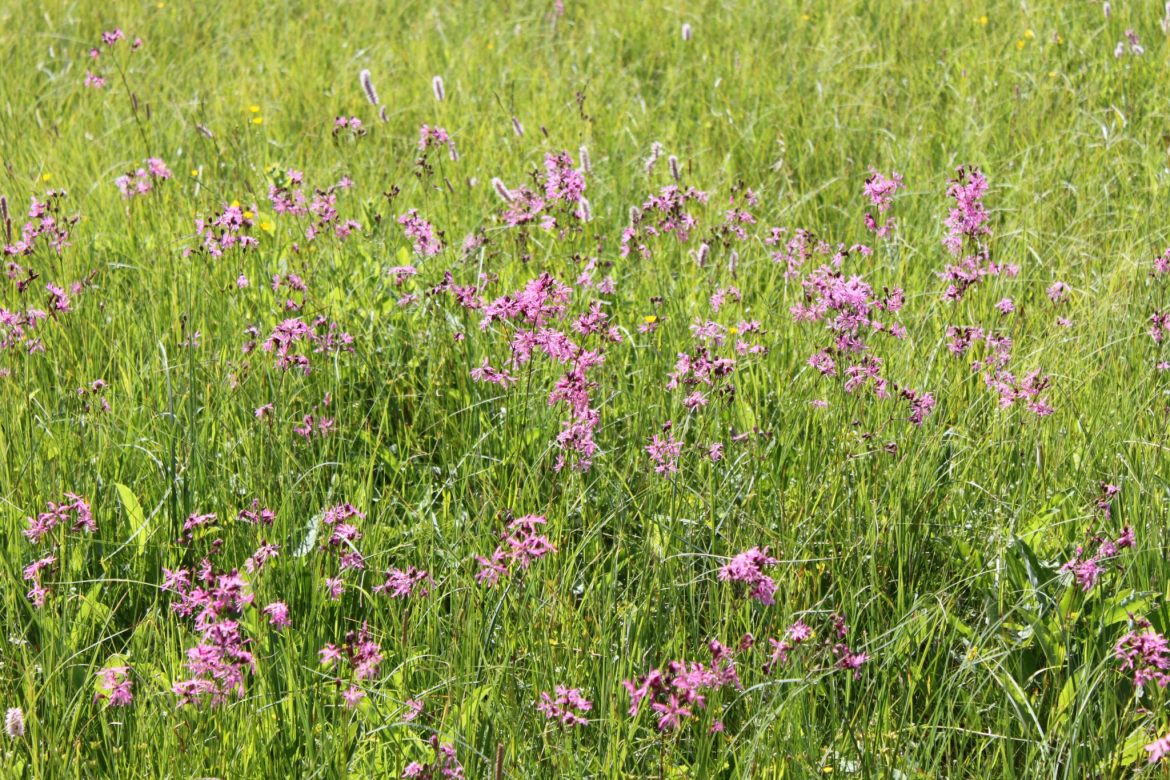
These grasslands – specifically the dry permanent grasslands of hay meadow and pasture, were the object of this project. But it is important to remember that they lie with a very important man-made mosaic of habitats, including forest and arable. This leads to extraordinary biodiversity. As an indicator, Southern Transylvania is the last lowland farmer landscape in Europe with viable populations of wolves and bears.
In the early 1990s the majority of Saxons left their Saxon villages and cities and moved "home" to Germany. This caused a social and economic upheaval, and a depopulation of the area, bringing about land management changes and abandonment.
The dry grassland habitats and species of Târnava Mare are of European importance. The wildflower-rich pastures and meadows have disappeared over much of Europe through agricultural intensification, but are still widespread in this area. The dry grasslands of Transylvania have some of the highest floristic diversity recorded anywhere in the world, and support substantial populations of rare vertebrate and invertebrate fauna.
But these grasslands are threatened. Of the 5,000 ha of these grasslands in the area, about 1,000 ha are poorly managed: overgrazing in easily accessible sites, abandonment of less accessible grassland (causing spreading of thorny scrub). These effects are obvious but still easily reversible by re-establishment of traditional management.
The project is designed to help the continuation or re-establishment of grassland management that will bring these habitats under proper long term management regimes.
This “results-based” agri-environment scheme is targeted at High Nature Value hay meadows. The scheme rewards practical management that produces good quality hay and protects wild species.
Instead of paying according to management prescriptions as in typical agri-environment schemes, the scheme pays for the “result”: species-rich meadows, which is measured using certain plant species as indicators.
This means that farmers have the freedom to manage their meadows according to local conditions and weather, instead of having to follow precise mowing dates and other rules which do not take account of local conditions, and differences in weather from year to year.
These meadows provide hay for livestock, nectar for honeybees, medicinal plants, and extra income from nature tourism and local products through HNV marketing.
Schemes like this are already carried out in France, Germany and Switzerland. Farmers prefer using the results-based scheme because their expertise is recognised, they have the freedom to manage their meadows according to the local conditions and weather, and they are directly rewarded for the service they provide for nature, which is recognised by society.